
CBSE Class X, 2026
Every student in our Class X batch passed the 2026 board examinations.
 Yug Bora95.8%
 Saragandla Anjali96.8%
 Siya Khare95.4%
 Divyanshi AnandRank 3 (tie)95.4%
 Vaishnavi KawaleRank 595.2%
 Devashish HardasRank 695.0%
Our academic framework
Our academic framework integrates the CBSE curriculum, NEP 2020 and the National Curriculum Framework (NCF) to create a balanced, meaningful and future-ready learning experience. We place equal emphasis on academic excellence, experiential learning, critical thinking, creativity, values and well-being, nurturing the intellectual, social, emotional and physical development of every child.
From early childhood to Grade X, we empower students with the knowledge, skills and confidence to become independent thinkers, lifelong learners and responsible individuals, ready to thrive in a changing world.
Four stages, one journey
Choose a stage to see how learning works at that age.
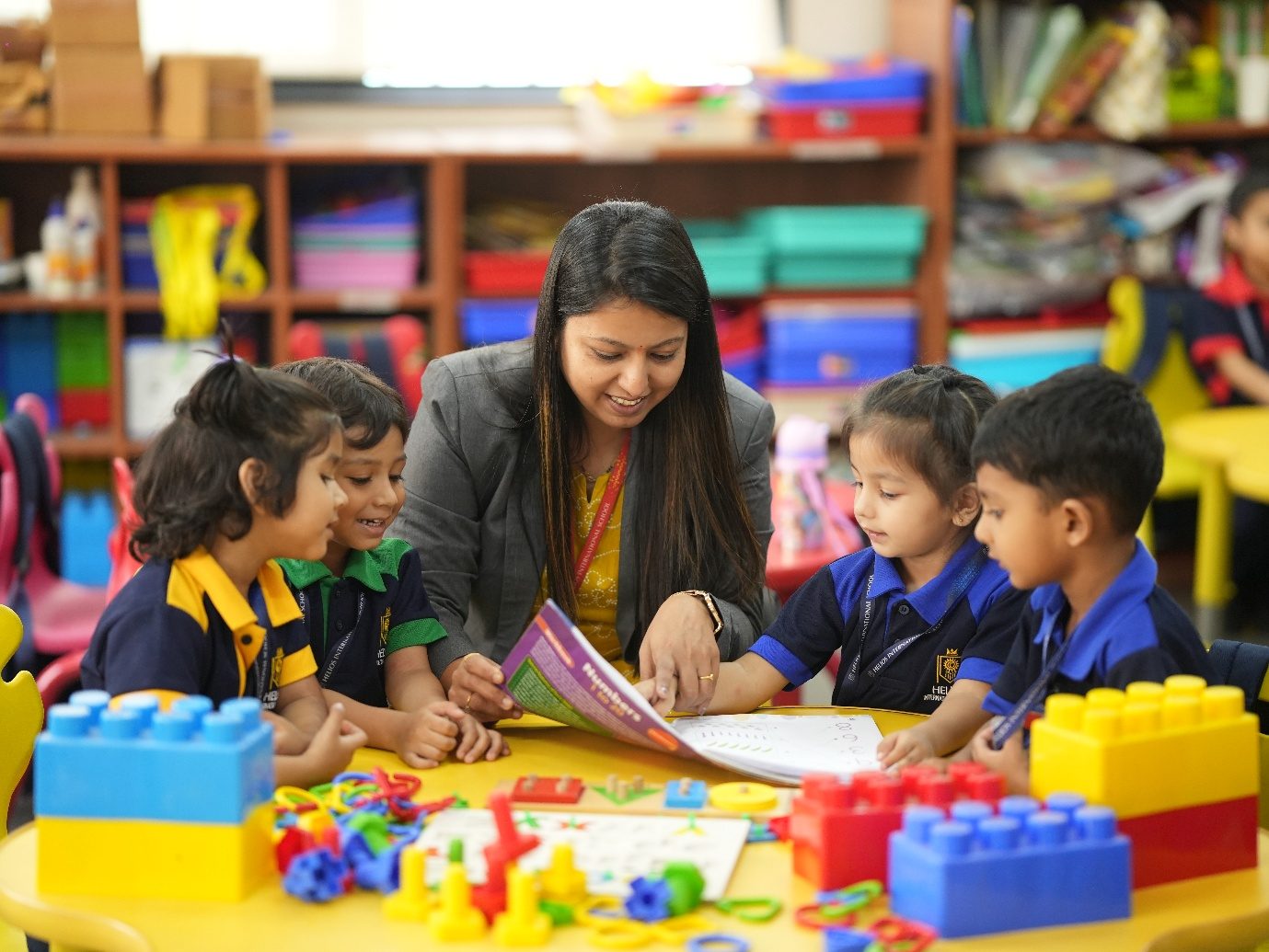
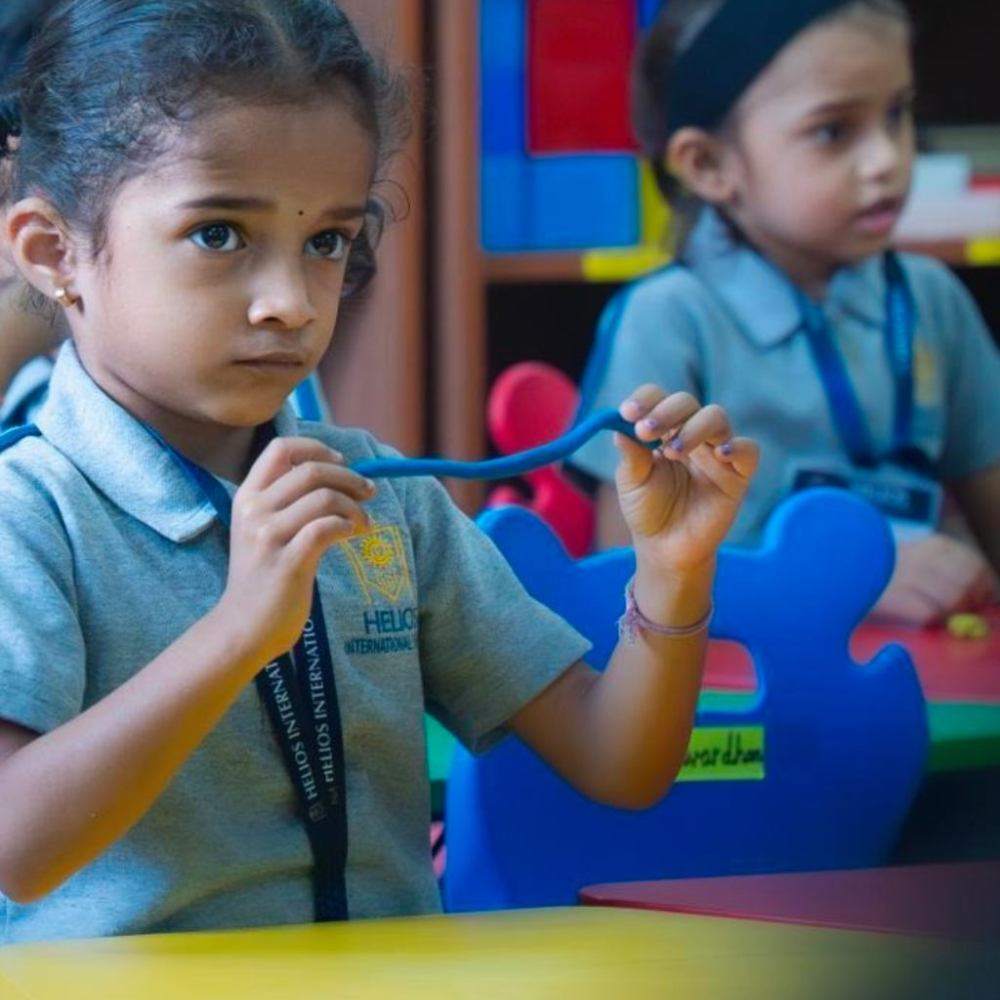 1Foundational StageNursery to Grade II, ages 3 to 8Joyful, play-based and discovery-led learning that builds confidence and a love for school.Explore this stage
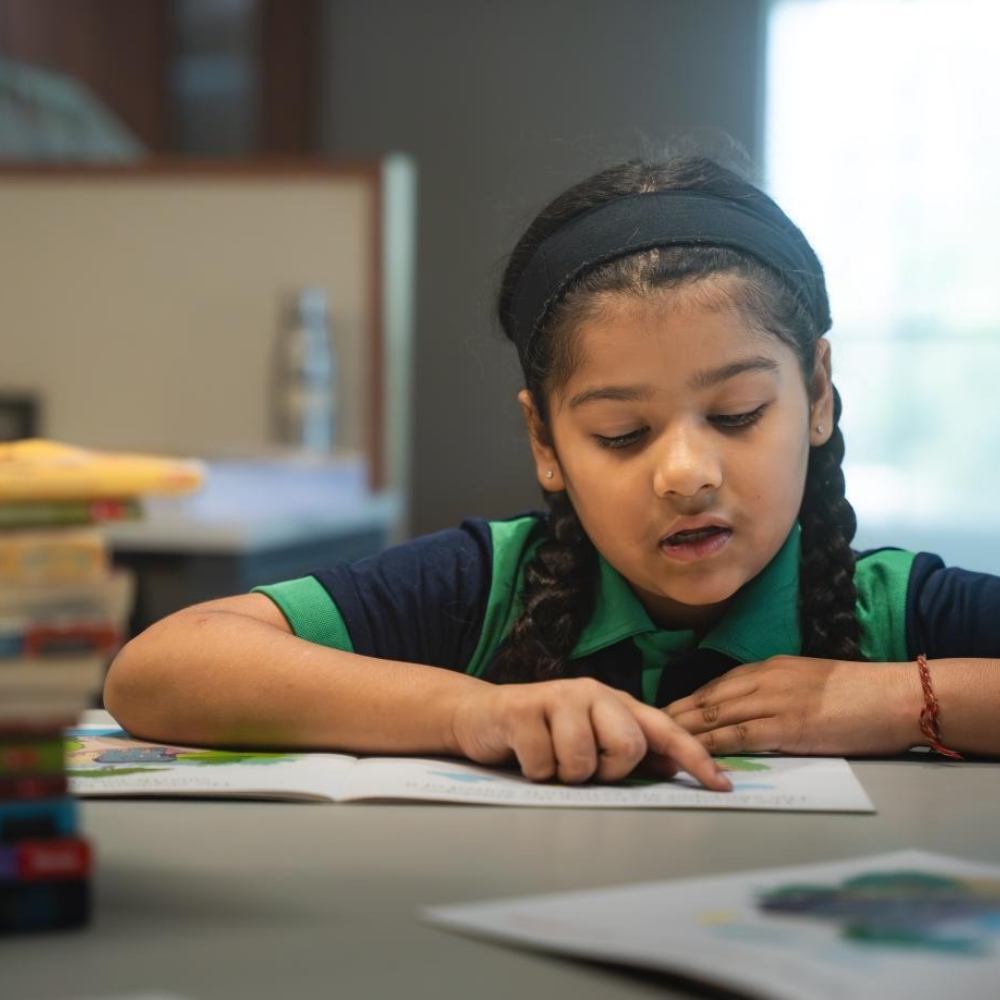 2Preparatory StageGrades III to V, ages 8 to 11From play to structured exploration – asking questions and linking lessons to real life.Explore this stage
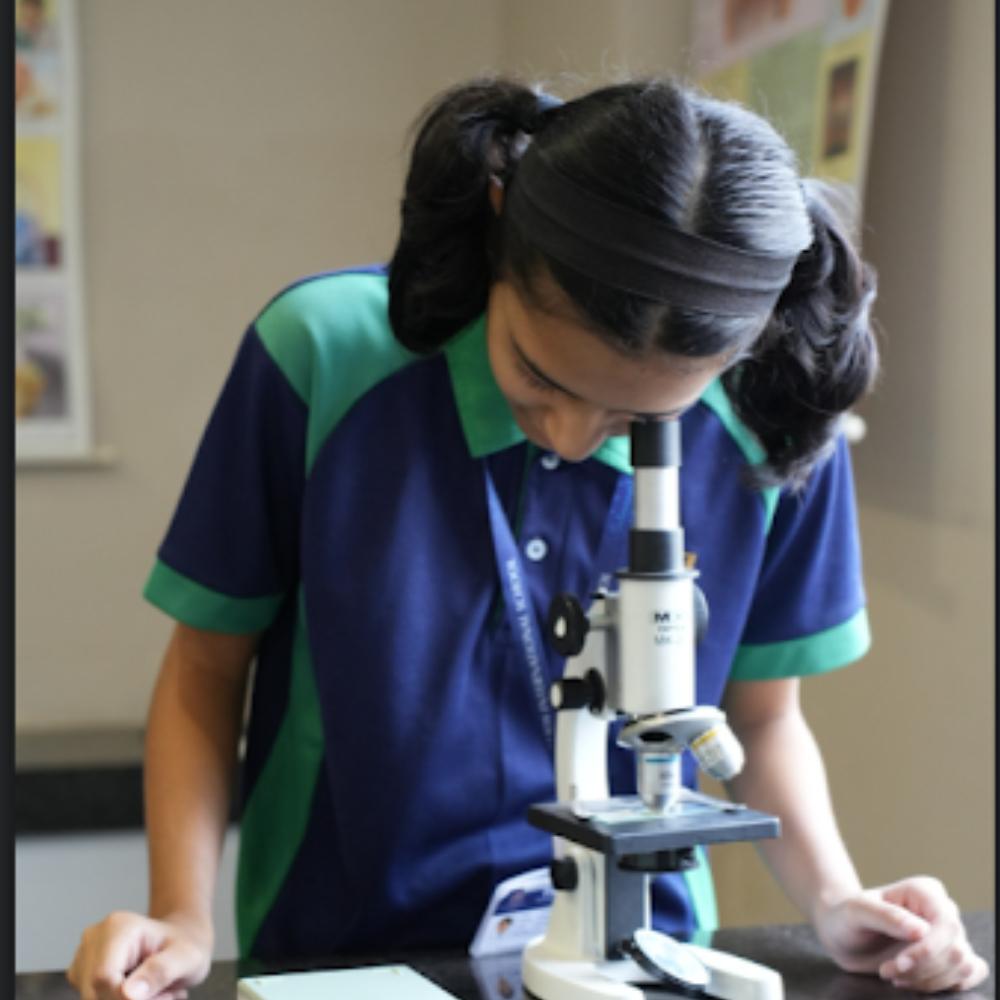 3Middle StageGrades VI to VIII, ages 11 to 14Subject-centered exploration, empirical experimentation, and multidisciplinary project work, integrating AI & CT and vocational exposure.Explore this stage
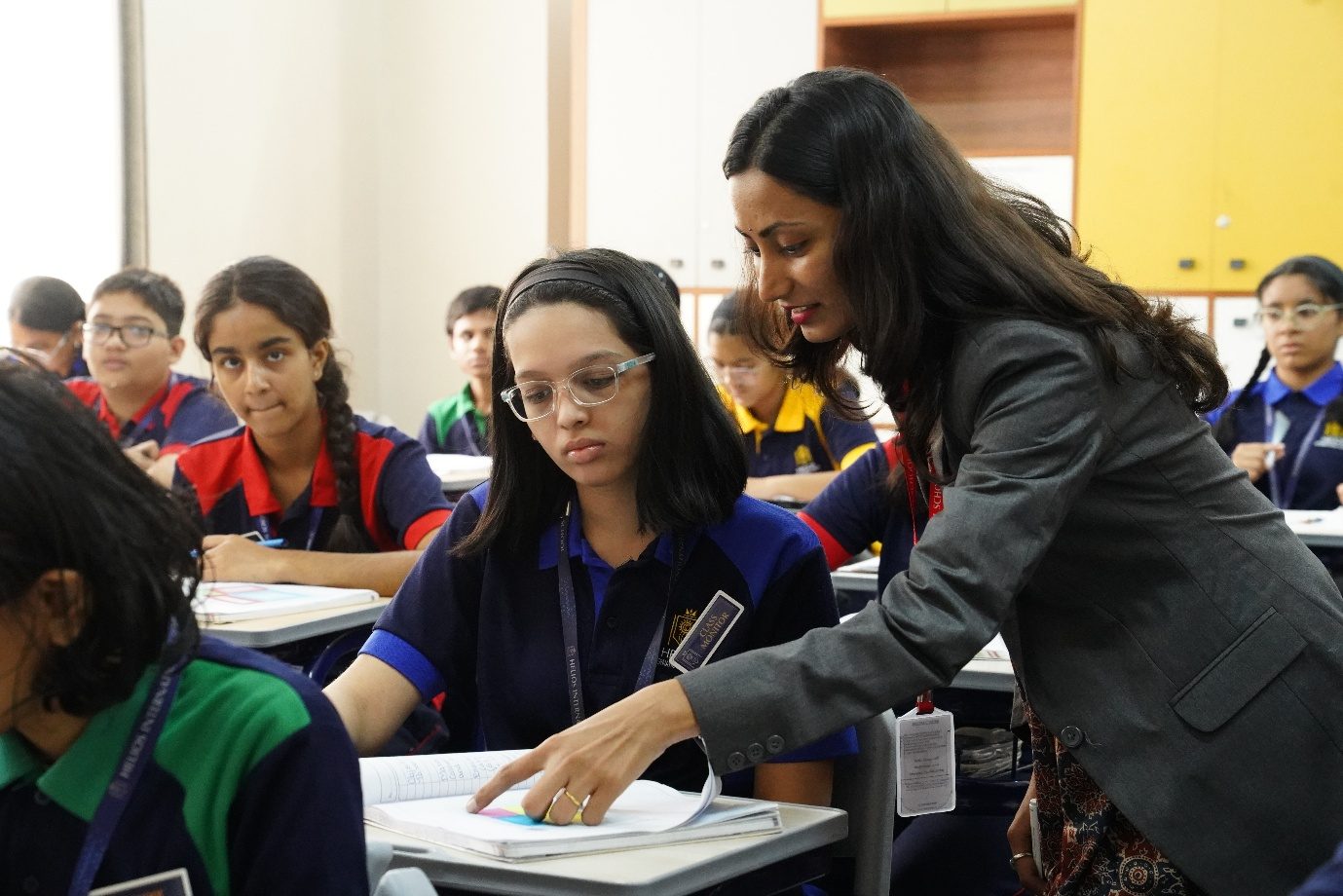 4Secondary StageGrades IX & X, ages 14 to 16Multidisciplinary study, greater choice of subjects, and critical thinking with a focus on deep conceptual mastery and flexible academic pathways.Explore this stage
How we teach
Our educators build flexible thinking through thematic and inquiry-based teaching, bringing art and technology into everyday lessons.
- Multidisciplinary learningBreaking traditional boundaries with flexible subject choices, enabling students to explore connections across sciences, humanities, and arts.
- Inquiry & empirical researchMoving from memorization to rigorous analysis, where students investigate complex concepts, defend theories, and apply logical reasoning.
- Art & technology integrationLeveraging advanced digital tools and creative problem-solving as core methodologies to evaluate real-world scenarios.
Beyond the classroom
Learning, growing and thriving beyond academics.
Subject Enrichment (SEA)
Projects and experiments that bring learning to life.
Computational Thinking & AI
Building logic, digital skills and problem-solving.
Kaushal Bodh & Vikas
Developing practical skills and self-reliance.
Sports & Physical Literacy
Fostering fitness, teamwork and well-being.
How progress is assessed
Assessment changes with each stage, from watching young children grow to preparing for the CBSE Class X boards.
| Stage | Grades | How we assess |
|---|---|---|
| Foundational | Nursery to Grade II | Observation-based, focused on growth and participation |
| Preparatory | Grades III to V | Focused on understanding, skills and application, not memorisation |
| Middle | Grades VI to VIII | Competency-based, for conceptual clarity and skill mastery |
| Secondary | Grades IX and X | Board-aligned, with regular feedback and mentoring |
Questions parents ask
Which board does Helios International School follow?
The CBSE curriculum, aligned with NEP 2020, from Nursery to Grade X (affiliation no. 1131367).
What are the four learning stages?
Foundational (Nursery to Grade II), Preparatory (Grades III to V), Middle (Grades VI to VIII) and Secondary (Grades IX and X).
Is technology part of everyday learning?
Yes. Interactive smartboards are available in all classrooms from Pre-Primary, with screen time carefully regulated. Information Technology (IT) is introduced from Grade I, while AI and Computational Thinking (CT) are introduced from Grade III.
Begin your child's learning journey
Our admission counsellors will guide you through every step. School tours and campus visits are by prior scheduled appointment only.